The generations on either side of me link me to my past and my future. My view of family history involves revealing the roots and the branches.

Throughout this blog you will find perspectives related to the doctrines of temple and family history work from revealed revelation given to living prophets of The Church of Jesus Christ of Latter-day Saints.

Saturday, March 7, 2015

From Facebook to Family - Shane's Story

Did you catch the article in the LDS Church News today about my session at RootsTech?


Check it out here:
http://www.deseretnews.com/article/865623533/RootsTech-2015-Finding-the-Living-Among-the-Dead.html

In the article I share an inspirational story that demonstrates how the tools from my presentation can be used in finding the living. Two years ago I helped my friend Shane Adair find his birth family. Please read the LDS Church News article for the story and then enjoy the photos below of Shane and his new family.

Facebook Post
Shane and his MOMS
Shane and his brother (paternal)
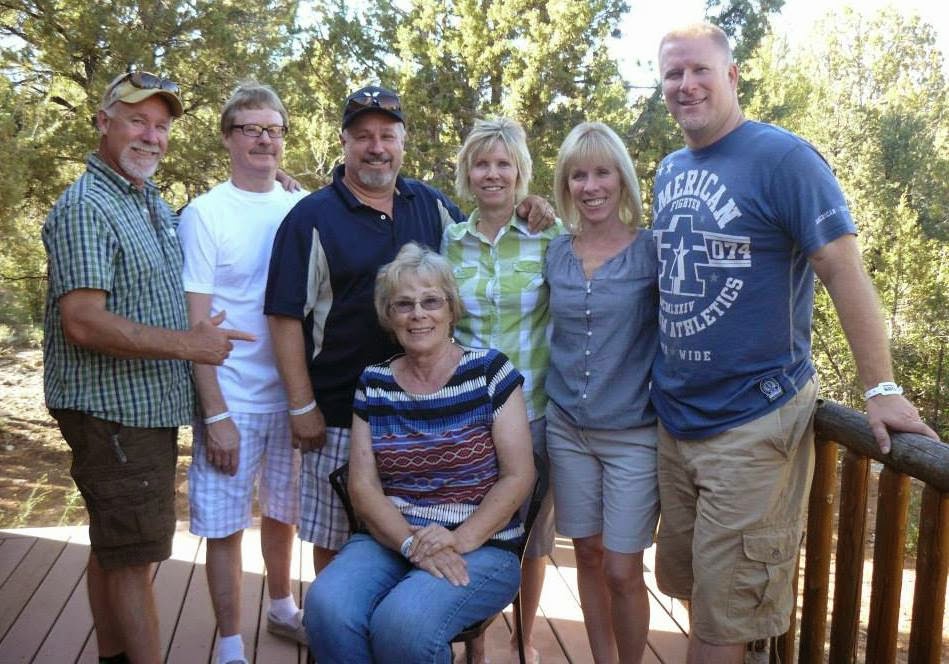
Shane's maternal family (minus 2)
Myself and Shane - March 2013
#RootsTech

Wednesday, March 4, 2015

The Chosen

Llewellyn Harris
We are the chosen.
In each family there is one who seems called to find the ancestors.
To put flesh on their bones and make them live again.
To tell the family story and to feel that somehow they know and approve.
Doing genealogy is not a cold gathering of facts but, instead, breathing life into all who have gone before.
We are the story tellers of the tribe.
All tribes have one.
We have been called, as it were, by our genes.
Those who have gone before cry out to us: Tell our story. So, we do.
In finding them, we somehow find ourselves.
How many graves have I stood before now and cried? I have lost count.
How many times have I told the ancestors, "You have a wonderful family; you would be proud of us."
How many times have I walked up to a grave and felt somehow there was love there for me? I cannot say.
It goes beyond just documenting facts.
It goes to who I am, and why I do the things I do.
It goes to seeing a cemetery about to be lost forever to weeds and indifference and saying - I can't let this happen.
The bones here are bones of my bone and flesh of my flesh.
It goes to doing something about it.
It goes to pride in what our ancestors were able to accomplish.
Llewellyn Harris letter
to children and grandchildren
How they contributed to what we are today.
It goes to respecting their hardships and losses, their never giving in or giving up, their resoluteness to go on and build a life for their family.
It goes to deep pride that the fathers fought and some died to make and keep us a nation.
It goes to a deep and immense understanding that they were doing it for us.
It is of equal pride and love that our mothers struggled to give us birth, without them we could not exist, and so we love each one, as far back as we can reach.
That we might be born who we are.
That we might remember them.
So we do.
With love and caring and scribing each fact of their existence, because we are they and they are the sum of who we are.
So, as a scribe called, I tell the story of my family.
It is up to that one called in the next generation to answer the call and take my place in the long line of family storytellers.
That is why I do my family genealogy, and that is what calls those young and old to step up and restore the memory or greet those who we had never known before.

- By: Della M. Cummings Wright
- Rewritten by her granddaughter: Della JoAnn McGinnis Johnson
- Edited and Reworded by: Tom Dunn, 1943.

This is where I found the poem: 


The man in the photo is my 3rd great grandfather, Llewellyn Harris; and the letter he wrote on August 15, 1903 to his children and grandchildren about their ancestors.

Monday, March 2, 2015

Relative Finder - Cousins Around Every Corner

I am all about finding cousins. When I meet someone new, and we start talking about family history, my brain begins working immediately to try to find a common ancestor with my new friend. Did you catch that ... "we start talking about family history"? I can turn any conversation into a family history conversation ... can you? We all have parents and grandparents and ultimately we are all part of a global human family.

I love Relative Finder from the BYU Family History Technology Lab.
Go to https://www.relativefinder.org/ and login with your FamilySearch.org account.

Relative Finder will pull up to 14 generations of FamilySearch Family Tree data based on your account. You need to be connected to deceased generations in FamilySearch for this process to work. 90% of people with FamilySearch accounts are not yet connected to all four grandparents in the FamilySearch Family Tree. If you haven't yet been into FamilySearch or haven't been into your account for awhile, you will need to go there first to make sure you are connected to deceased generations.

There are currently two parts to Relative Finder: Public Groups and User Groups. The Public Groups are data sets the provider maintains that contain a specific set of individuals. For example, there are only 40 signers of the US Constitution.

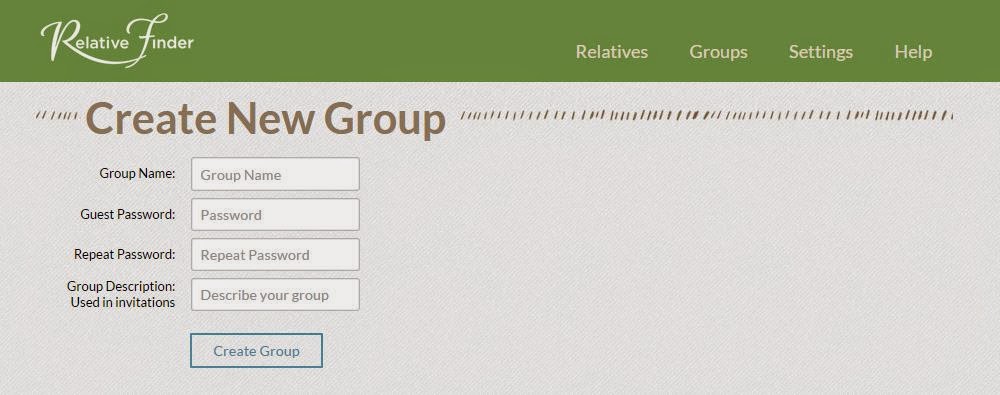
User Groups can contain an infinite amount of people. Users join these groups by entering in the group name and group password.

You can create a User Group and invite anyone to join by providing them the group password.


You can also manage the group and add the FamilySearch PID of deceased people to any User Group you have created and you can choose at any time to leave any User Group that you have joined.


Relative Finder works by finding the nearest common deceased ancestor between you and the other people in the selected group. Because the data of living people in FamilySearch is protected you may find, in a common User Group, that your relationship to your immediate family members may be listed as cousin instead of sibling or parent. Remember that Relative Finder looks for the nearest common deceased ancestor. It doesn't know that you and your sister are siblings if the nearest deceased ancestor is a grandparent; it does know that your relationship is at least cousins.


In a User Group, if you and a friend find that you are related, you may notice that each of you show a different common ancestor. This is common and just means that you are connected on multiple lines.

Relative Finder reports relational data from FamilySearch Family Tree data. The relationships are only as valid as the Tree data. If you find inaccuracies in Relative Finder, then you are finding inaccuracies in the Family Tree. This provides a perfect opportunity to research and document and source the line in question. There are many instances of duplicate individuals in the Family Tree that need to be identified and cleaned and merged. Some gateway ancestors in Family Tree are not able to be merged at this time, but will be within the next two years. This will clean up the data even more. Once changes are made to the Family Tree, you will want to update your view of the Tree data in Relative Finder. You do this by going to "Settings" and select "Update Tree".

I noted in the list above that it looks like I am related to Orville Wright.  This caused a lot of excitement in my family and we had a few discussions yesterday. I wanted to know more about the Wright brothers, so I looked up information about them on a historical website and found that their parents were Milton and Susan Koerner Wright. If you notice in the chart below from Relative Finder, it looks like Orville's parents are Charles and Ruth Wright. So I went to FamilySearch Family Tree.  Due to some incorrect merging a couple of years ago by multiple people, the records of my relative named Orville got mixed with the records for the famous Orville Wright. What a huge mess! And a lot of work that needs to be done to get it fixed. Anyone in my family need a new project?

I have recently created two User Groups.

I am currently serving as the family history consultant in my LDS ward and I recently created a group for my ward members for the following three reasons:
  1. A FamilySearch account connected to deceased generations is needed for Relative Finder to work. Relative Finder is a great gateway for getting people into FamilySearch; perhaps they will linger there.
  2. It is fun to see the famous people you may be related to; only if the Family Tree data is correct. And if they find something wrong, now they have a family history project to work on.
  3. Build unity in the ward family. When you realize that your neighbor / ward member is really your cousin, you feel greater love toward the other person. This can open doors for family collaboration. 
Results so far:
Energized ward about family history.
It is fun to find cousins.
No one knows who the women are in the group because of their maiden names.

Relative Finder just created a new tool that helps fix this maiden name issue. Under "Settings" one can now "Edit Display Name". So now the women can chose what shows up as their last name on the charts and lists in Relative Finder.

I also created a group for my high school graduating class. I am the chair of our 30th class reunion in a few years and I thought this would be a fun way to keep the connection and conversation going between reunions. There is also a common belief among some Utah historians that everyone who has pioneer ancestry in Utah is related to each other. I want to test this theory on a small scale.  I also want to know about my potential cousins I grew up with in an area that my ancestors settled; though my parents were transplants to the area.

Give Relative Finder a try. Create a group with your friends or associates. Have fun!

Be nice to everyone you meet; you never know who you may find to be your cousin!

Sunday, March 1, 2015

Temple is the Connecting Link

Photo from LDS Media Library
“And so we have two great churches, one in heaven, the other upon the earth.  They are moving along parallel lines, and the temple of God, it appears to me, is the connecting link that connects the heavens with the earth, because it is through the temple that we will be able to reach our dead and not otherwise.  To pray for the dead may not be of any real assistance to them.  To actually help them, we must do a work for them.”

– Rudger Clawson (Conference Report April 1933, pp 77-78; Doctrines of the Gospel Student Man., p 85)